
13.5.2026 / Children's Wellbeing
Rethinking Screen Time
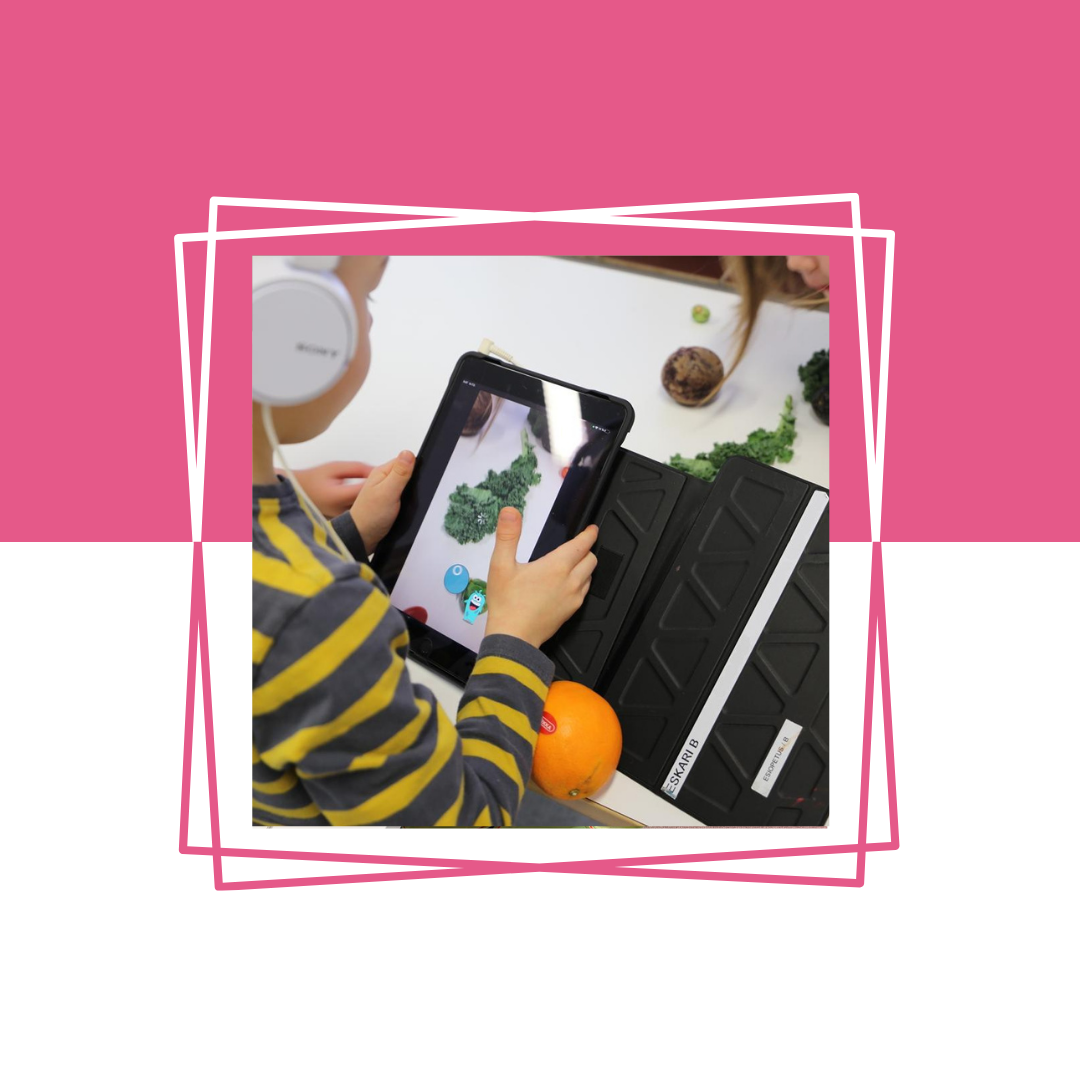
Screens are now part of everyday childhood. For children in the early years and primary school, they are not occasional or exceptional, they are simply there, woven into daily routines in ways that feel almost unavoidable.
For many parents, that brings a challenging and ongoing question: how much is too much?
But increasingly, that question is also recognised to be missing something. Because it assumes that all screen time is the same, when in reality, it rarely is. Most parents can see the difference in their own children. Some screen experiences leave them restless, distracted, or oddly tired. Others seem to hold their attention in a more meaningful way, sometimes even spilling over into questions, ideas, or play.
What’s becoming clearer is that the real issue may not be the amount of screen time, but the kind of engagement it creates.
Beyond “how much”: what kind of screen time?
There is a type of screen use that asks very little from a child. Fast-paced videos, endless scrolling, content designed to keep attention rather than deepen it — it fills time, but it doesn’t necessarily build anything. It can also quietly shape other habits. Eating becomes distracted, snacking becomes automatic, and switching off becomes harder.
At the other end, there are more interactive experiences that invite children to think, respond, and explore. These are often labelled as “educational,” and they can be valuable. But even here, something is often missing. What happens on the screen tends to stay there. It doesn’t always carry into how children behave, what they choose to eat, or how they spend their time once the device is put away.
For younger children especially, that gap matters. At that age, learning is not something separate from life — it is life. It shows up in routines, in play, in small daily choices. If something doesn’t translate into action, it rarely sticks.
What experts are starting to agree on
Interestingly, this shift away from focusing purely on time is reflected in national guidance as well.
In the UK, organisations like the NHS and the Royal College of Paediatrics and Child Health no longer emphasise strict limits. Instead, they encourage families to look at the bigger picture – whether children are sleeping well, moving enough, and spending time together.
In Finland, guidance from the Mannerheim League for Child Welfare and the Finnish Institute for Health and Welfare places strong importance on balance, particularly daily outdoor play and consistent routines. Screens are part of life, but they are not meant to replace it.
Across the Gulf region, institutions such as the Ministry of Health and Prevention UAE and the Saudi Ministry of Health highlight the importance of reducing sedentary behaviour and staying involved in how children use screens.
Across very different contexts, the underlying message is surprisingly aligned. Screens themselves are not the problem. What matters is how they fit into a child’s day — and what they might be replacing.
The part we don’t talk about enough
One of the things that often gets overlooked in this conversation is food.
Screen time doesn’t just affect attention or sleep. It shapes how children eat. When a child is absorbed in passive content, eating can become almost automatic – a handful of snacks here, a bite there, without much awareness. Over time, this changes not only what they eat, but their relationship with food altogether.
But the opposite can also be true. When children are engaged, when something sparks curiosity, they become more present. They ask questions. They notice things. They are more open to trying something new. Food, in that context, becomes something to explore rather than something to consume in the background.
From screen time to real life
Perhaps the most useful way to think about screen time, then, is not in terms of limits, but in terms of direction.
Some screen experiences are closed – they begin and end on the device. Others are more open. They lead somewhere. A child watches something and then wants to try it. Learns something and then talks about it. Sees something and then acts on it.
For children in the early years and primary age, that difference is everything. Because that is where habits begin – not in what they watch, but in what they do afterwards.
This is where the idea of “good screen time” becomes more meaningful. Not as a justification for more time on devices, but as a way of using that time differently. As a starting point, rather than a destination.
When screen experiences help children connect what they see with what they do, whether that’s understanding food, trying something new, or simply becoming more aware of their choices, they stop being passive moments and start becoming part of development.
For parents, this doesn’t require removing screens or getting everything right. It’s more about a small shift in perspective. Paying attention not just to how long children are on a device, but to what that time is doing for them. Staying involved, especially when they are young. And looking for opportunities to connect what happens on the screen with what happens afterwards.
Screens are not going away. But they don’t have to be something children simply drift into.
Used well, they can become something far more intentional – a way to support the habits, awareness, and confidence that children carry with them long after the screen is turned off.
References
Abu Dhabi Early Childhood Health Authority